
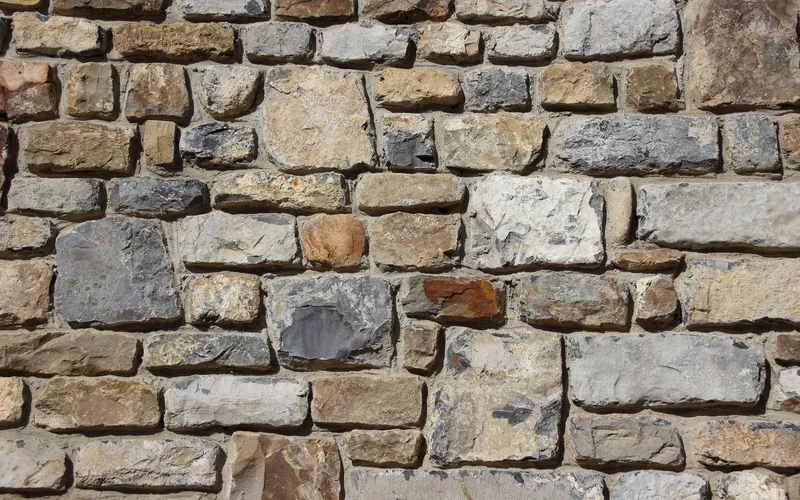
A new lean, bulge, offset joint or drop in the ground behind a retaining wall is a reason to arrange a professional assessment, not evidence of one particular cause. If the wall is actively moving, pieces are falling or collapse appears possible, keep people away from above and below it and seek urgent help from a safe location. Call emergency services if people or a public route are in immediate danger. Do not climb it, dig at its base or pull out loose units. The FHWA condition checklist is for transportation structures but illustrates why assessors look at the face, nearby ground and drainage together.
Check for change without moving closer
From a safe place, note where a joint no longer aligns, where the face bows, and whether coping has shifted or material is missing. If you have dated photos from a similar viewpoint, compare them. Some walls are intentionally inclined back into the slope; FHWA’s rockery evaluation guidance treats that inclination as part of the geometry. Do not infer new movement from the fact that a wall is not vertical. A new local bulge or a change relative to older photos is more useful information than the word “lean” on its own.
Tell the assessor what changed around the wall
Note new ponding, sediment that appears near the face, ground that sank behind the wall or changes to irrigation, runoff or a nearby driveway. Include when you noticed the change. The federal inspection checklist treats outlet problems, ground settlement and face distortion as separate observations; it does not establish that one caused another. For rockeries specifically, FHWA notes that seepage can carry soil through face openings and that ground loss can leave settlement behind the wall. Do not generalize that mechanism to every wet wall. Use the drainage guide to describe the water route only if you can see it without entering the affected area.
Decide on repair only after the assessment
Pass along drawings, previous repairs, recent changes to the slope and dated photos if available. Ask what the assessor can establish from visible conditions and what still needs investigation. Avoid committing to a cosmetic repair or a repeat of the previous wall design before you understand which parts of the site or structure need attention. If a replacement is recommended, bring a sketch of slopes and nearby loads and use the proposal checklist to separate the assessment findings, the redesigned scope and who verifies the work.