
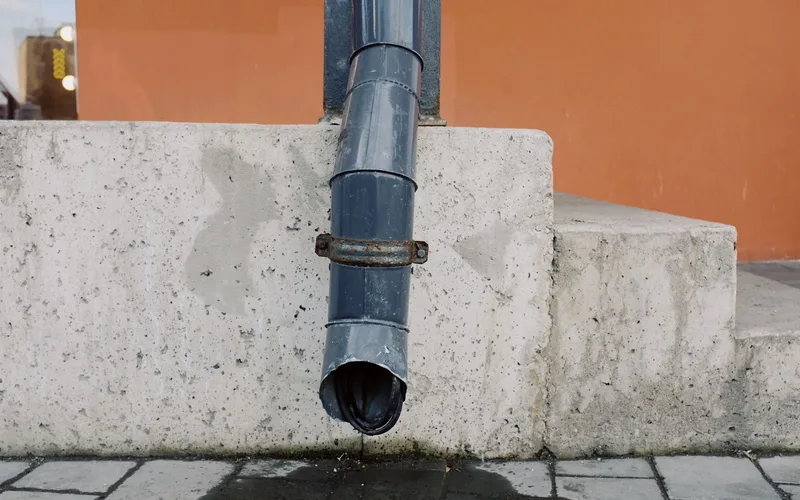
A retaining wall drainage plan should show two routes: where runoff above the wall goes and where water collected behind the wall is released. Start by looking uphill from a safe spot after rain. A puddle shows where water collected, not where it started. Illinois Extension’s drainage guide points to grading, hard surfaces and runoff from adjoining lots as possible contributors; FHWA’s rockery guidance illustrates the separate concern of seepage through soil behind a wall.
Record what the rain actually does
On a sketch, mark the direction water travels, the places where it spreads or ponds, and the point where you lose sight of it. Look for a roof downspout, the low edge of paving and mud left by runoff. Note whether the water pools at a window well or reaches the wall line from another lot. An arrow you saw water follow is different from one you infer from dry ground. Neither tells you how much water moves through the soil.
Ask the designer to trace each route to the end
On the grading plan, ask where water coming down the slope goes before it reaches the wall. On the cross section, ask what collects water behind the face, how the detail keeps soil out of the drainage material, and where the collected water discharges. FHWA’s rockery guidance illustrates why filtration and a suitable outlet matter: seepage can carry soil through openings and ground can settle where that soil is lost. That example explains the mechanism, not what pipe, filter or wall detail your yard needs.
Check what happens at the outlet and in a heavier storm
Ask who verifies the proposed destination and what happens if the normal route cannot carry the flow. A pipe that ends on a drawing at the property line does not establish a usable or authorized outlet. If a patio sits above the wall, ask where its runoff first arrives; patio surface or base drainage and drainage behind the wall are different systems even when a designer coordinates them. Use the written proposal checklist to capture who owns that decision. If the wall is already bulging or the ground has dropped, use the movement guide instead of walking close to inspect or clear an outlet.
Read next: map how runoff moves across the whole yard after a storm.